
Amazon's Fuel Surcharge: How Sellers Can Protect Their Margins During Rising Costs
Wednesday, April 1, 2026
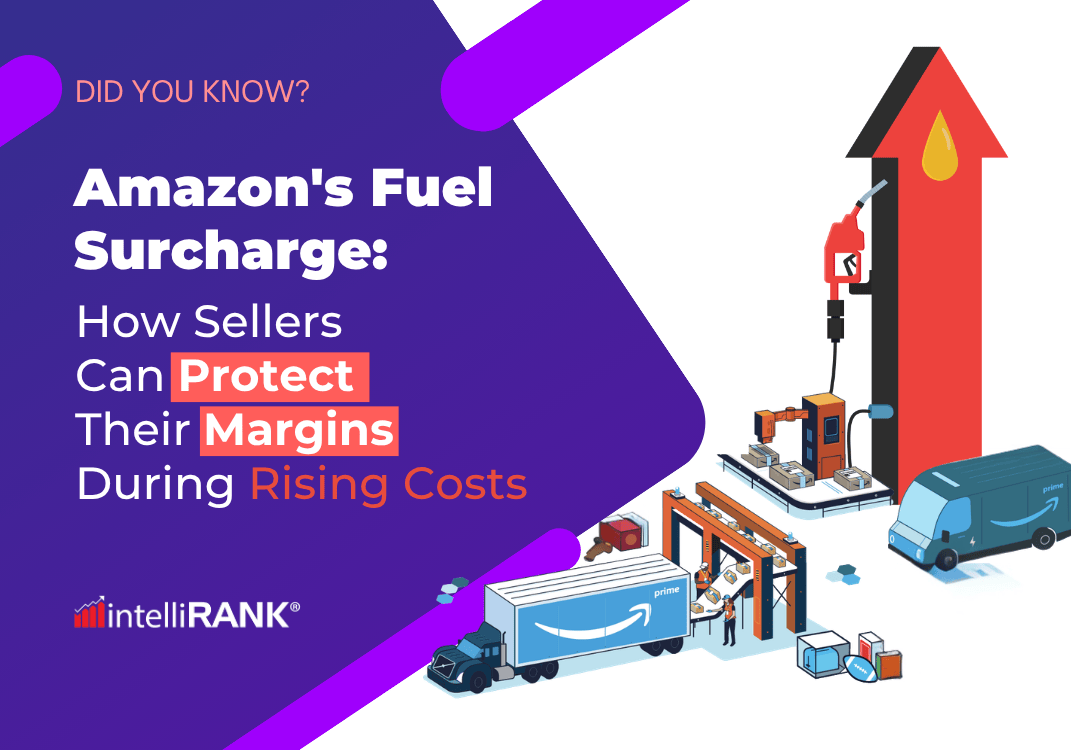
Amazon has just announced a new 3.5% fuel and logistics surcharge for sellers using Fulfillment by Amazon (FBA), set to take effect on April 17, 2026. With the Iran conflict and oil prices surging past $107 per barrel, sellers across the U.S. and Canada are about to see their costs increase… again.
If you're selling on Amazon, this is a direct hit to your profit margins that could turn profitable products into money losers overnight.
But here's the reality: while you can't control Amazon's fees or global oil prices, you absolutely can control how efficiently you spend your advertising budget.
In this post, we'll break down exactly what this surcharge means for your business, why it's happening, and most importantly—how strategic PPC management can help you protect (and even grow) your margins during periods of rising costs.

What is the new fuel and logistics surcharge?
According to Amazon's notice to sellers, this is why the marketplace giant decided to add a 3.5% fuel and logistics-related surcharge on all FBA fulfillment fees for sellers in the United States and Canada:
_"Elevated costs in fulfillment and logistics have increased the cost of operating across the industry. We have absorbed these increased costs so far. However, similar to other major carriers, when costs remain elevated, we implement temporary surcharges on our fulfillment fees to recover a portion of the actual cost increases we are experiencing."_
Now let’s answer the most burning question: is this fee temporary or permanent?
Amazon calls this a "temporary surcharge," but history suggests otherwise. Similar surcharges introduced during past crises (like the COVID-19 pandemic) often became permanent once implemented. Sellers should plan for this fee to remain in place for the foreseeable future—and potentially longer.
How this surcharge affects your profit margins
Let's look at the impact with a practical example:
Product: Stainless steel water bottle
Sale price: $24.99
FBA fulfillment fee (before surcharge): $5.32
New 3.5% surcharge: $0.19 (3.5% of $5.32)
New total FBA fee: $5.51
That extra 19 cents might not sound like much, but multiply it across thousands of units per month, and suddenly you're looking at hundreds or thousands of dollars in additional costs.
Remember, this surcharge comes on top of:
- Referral fees (8-15% depending on category)
- Storage fees
- Rising cost of goods due to supply chain disruptions
- Increased PPC costs as competition intensifies
For many sellers, profit margins have already been squeezed from 20-25% down to 10-15% over the past few years. An additional 3.5% surcharge could be the difference between profitability and loss.
What sellers can (and can't) do about rising costs
You can't negotiate with Amazon on this surcharge, and you can't avoid it if you use FBA (which most sellers do). But you CAN control:
- Your advertising efficiency – Are you wasting budget on low-converting keywords?
- Your conversion rate – Is your listing optimized to turn clicks into sales?
- Your product pricing strategy – Can you adjust prices without losing competitiveness?
- Your cost of customer acquisition – How much are you spending to acquire each sale?
The most immediate and impactful area where you can protect your margins is PPC efficiency. If you're currently spending $1.50 per click when you could be spending $0.90, that wasted $0.60 compounds across thousands of clicks—often costing more than the surcharge itself.
How strategic PPC management protects your margins
When costs rise, the worst thing you can do is cut your advertising budget blindly. That just reduces visibility, tanks your rankings, and accelerates your decline.
Instead, the solution is smarter PPC management—spending your budget more efficiently so every dollar works harder.
1. Eliminate wasted ad spend on low-intent keywords
Most sellers waste 30-50% of their PPC budget on keywords that generate clicks but not sales.
For example, some sellers may bid on the broad match keyword "water bottle" and their ads show up for:
- "cheap water bottle"
- "free water bottle"
- "plastic water bottle" when you sell stainless steel
- "dog water bottle"
Solutions:
- Use exact and phrase match keywords that indicate buying intent
- Build comprehensive negative keyword lists
- Target long-tail, high-intent searches like "BPA-free stainless steel water bottle 32oz"
2. Optimize bids by placement performance
Not all ad placements perform equally. Top-of-search placements typically convert 2-3x better than product page placements—but many sellers bid the same amount for both.
Strategic approach:
- Increase bids for top-of-search (where conversions happen)
- Reduce bids for product pages (lower intent, lower conversion)
- Monitor placement reports weekly and adjust accordingly
3. Focus budget on proven winners
Many sellers spread their budget across dozens of keywords—including many that barely convert. This dilutes performance and wastes money.
Strategic approach:
- Identify your top 10-20 converting keywords
- Allocate 60-70% of your budget to these proven winners
- Test new keywords with only 20-30% of budget
- Pause or reduce spend on anything with ACoS over 2x your target
4. Retarget high-intent shoppers with sponsored display
Shoppers who viewed your product page but didn't buy are high-value prospects. They're already interested—they just need a reminder.
Solutions:
- Use Sponsored Display to retarget product page viewers
- Show them ads as they browse Amazon and external websites
- Offer a small incentive (coupon, bundle deal) to close the sale
5. Defend your branded keywords aggressively
If you're not bidding on your own brand name, competitors are stealing your customers—and you're paying to acquire them twice.
Strategic approach:
- Create dedicated branded campaigns with exact match keywords
- Bid high enough to always win top placement
- Use these campaigns to capture repeat customers and brand searches
6. Continuously test, measure, and optimize
The sellers who maintain profitability during cost increases are those who treat PPC as an ongoing optimization process, not a "set it and forget it" task.
Strategic approach:
- Review campaigns weekly (at minimum)
- A/B test ad creative, bids, and targeting
- Add negative keywords based on Search Term Reports
- Adjust budgets based on performance, not intuition
The cost of poorly managed PPC?
Let's compare two sellers facing the same 3.5% surcharge increase:
Seller A: No PPC optimization
- Monthly ad spend: $10,000
- ACoS: 45%
- Wasted spend on irrelevant keywords: ~$3,500/month
- Response to fee increase: Panic, reduce ad budget, lose rankings
- Outcome: Sales drop 30%, margins erode further
Seller B: Strategic PPC management
- Monthly ad spend: $10,000
- ACoS: 25% (through optimization)
- Wasted spend: Minimal (~$500/month)
- Response to fee increase: Optimize PPC further, reallocate wasted spend
- Outcome: Maintains sales volume, recovers surcharge cost through efficiency gains, increases market share as competitors falter

The difference? Seller B treats PPC as a strategic growth lever, not just an expense.
The math is simple: if you can reduce your ACoS from 35% to 25% through better PPC management, you've just recovered the 3.5% surcharge cost—and even more.
Don't let rising costs destroy your Amazon business!
The 3.5% fuel surcharge is just the latest in a series of cost increases Amazon sellers face. But while you can't control Amazon's fees or global oil prices, you absolutely can control how efficiently you spend your advertising budget.
The sellers who succeed during periods of rising costs are those who:
✅ Eliminate wasted PPC spend immediately
✅ Focus budget on proven, high-converting opportunities
✅ Continuously optimize campaigns based on data, not guesswork
✅ Treat PPC as a strategic growth lever, not just an expense
Not sure if you're wasting budget on underperforming campaigns? We'll show you exactly where your money is going—and how to fix it.
Our free PPC efficiency analysis includes:
- ACoS optimization opportunities – How much could you reduce your advertising costs?
- High-opportunity keywords – What profitable searches are you missing?
- Placement performance breakdown – Are you overpaying for low-converting placements?
- Custom action plan – Exactly what to change to protect your margins
👉 Get your free PPC efficiency analysis now and discover how much you could be saving every month. 🚀
Share this article
Free for Amazon Sellers
Get the FREE 4-Step Amazon Growth Strategy
The exact framework used by 4,000+ Amazon brands to launch, optimize, and scale — yours free.