
Amazon Just Announced the 2026 FBA Fee Changes! Here’s What Sellers Need to Know
Monday, December 8, 2025
Every year, Amazon adjusts its FBA fee structure. Sometimes the changes are small, other times they reshape your entire cost structure.
But the latest announcement for 2026 FBA fulfillment fees is one of the most impactful updates sellers have seen in years — and it is already creating a wave of discussions across seller communities, brand owner groups, and logistics professionals.
If you’re selling in the US marketplace (or planning to), this update affects every single FBA unit you ship starting January 15, 2026, right after the holiday peak season ends.
To help you stay ahead, I’ve broken down the entire set of changes into simple explanations, so you know how this will impact your business.
Holiday Fee Reminder: Peak Fees Apply Until January 14, 2026
Before we talk about the new rates, here’s the first thing you need to know:
From October 15, 2025, to January 14, 2026, holiday peak fulfillment fees are active. This applies to all FBA products.
So the new 2026 non-peak rates begin January 15, 2026.
If you’re planning Q4 inventory, restocks, or pricing strategies, make sure you’re aware that you’ll be transitioning from peak fees straight into a new fee structure mid-January.
The 2026 Fee Changes:
1. Standard-Size Products See Tiered Increases Based on Price
Amazon will continue using price-based fulfillment fees, but all three price tiers will shift upward.
Products priced between $10 and $50
These will see the largest increase in the standard-size category.
- Average increase: $0.08 per unit
- Small standard-size items increase even more: about $0.25 per unit
- Large standard-size products increase modestly: about $0.05 per unit
If your catalog lives heavily in this price range — which is most private-label brands — expect a noticeable increase in COGS per unit.
Products priced under $10
These also increase slightly.
- Average increase: $0.05 per unit
- Small standard-size increases: about $0.12 per unit
- Large standard-size: no increase
Amazon is intentionally keeping this price tier attractive, which leads to one of the most important benefits…
Low-priced products (<$10) receive an effective discount of $0.86 per unit compared to standard-priced items. This discount was $0.77 previously, so the gap is widening.
If you're in the low-price segment, your margins may improve compared to brands selling from $10–$50.
Products priced above $50
These see the biggest absolute increase.
- Average increase: $0.31 per unit
Why? Amazon says these products require:
- more handling
- more features
- faster processing
- better returns experience
- reduced missing/damaged inventory rates
Essentially, higher-value items require more protective handling, and Amazon is pricing that in. If you sell premium products, you need to adjust your margin expectations immediately.
2. Dimensional Weight Becomes Even More Important in 2026
For several years, Amazon has been shifting toward dimensional weight, and 2026 extends this logic further.
Starting January 15, 2026, Large standard, Small Bulky, Large Bulky, and Extra-Large products will be charged based on the greater of actual weight, or dimensional weight.
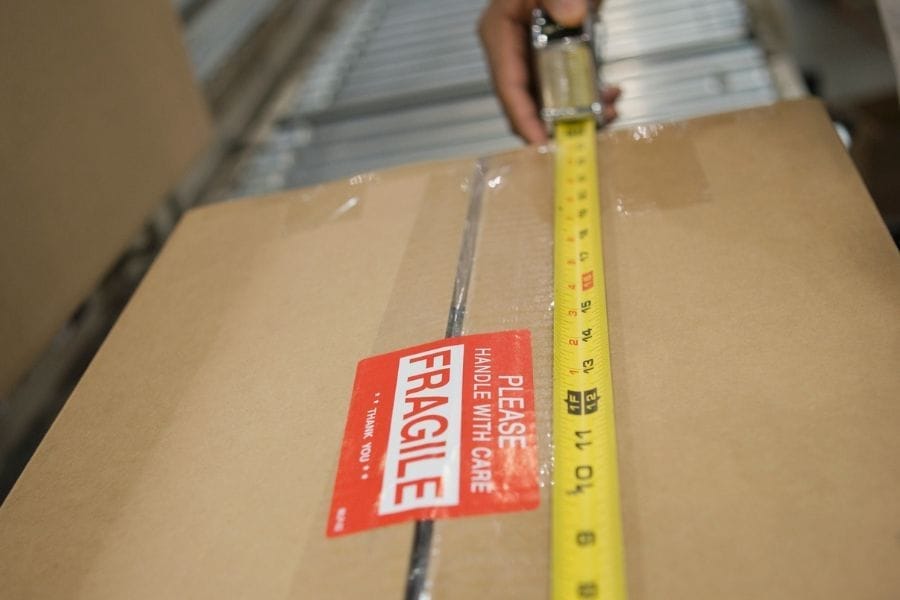
This applies to most physical products, except two exceptions:
- Small standard-size products
- Extra-large units weighing 150+ lbs
These categories will continue using unit weight only.
3. New Overmax Surcharges for Oversized Products
A new fee is being introduced for Extra-Large items. Amazon will begin charging Overmax handling fees for products that exceed:
- 96 inches on their longest side, or
- 130 inches when length + girth are combined
If your products fall into furniture, sporting goods, large appliances, or bulky packaging, you must review size tiers now. Even products slightly above these thresholds will see a cost jump.
This is part of Amazon’s push to discourage extremely oversized shipments.
4. SIPP Products Get Lower Fees — Non-SIPP Bulky Products Get Penalties
Ships in Product Packaging (SIPP) becomes a much more influential factor in 2026.
If your product is SIPP-certified (standard-size products only):
You automatically get lower FBA fulfillment fees. This is because Amazon saves packaging materials, labor, and time.
If your product is not SIPP-certified and it’s bulky:
You will pay _extra_.
Amazon is strongly incentivizing sellers to join SIPP, and 2026 makes it clear:
If your packaging can be shipped as-is, Amazon wants you to enroll.
If you haven’t applied for SIPP yet, now’s the time.
5. Low-Inventory-Level Fees Continue and Matter More Than Ever
If your inventory level falls below 28 days of supply, Amazon charges a “Low-Inventory-Level Fee.” This affects standard-size products and bulky products.
Amazon’s logic is simple: low inventory disrupts their logistics network, so they penalize you. The fee applies on every shipped unit, meaning this can seriously hurt margins during:
- busy seasons
- ranking pushes
- stockout recoveries
- unexpected spikes in demand
If you're not already monitoring sell-through and coverage, 2026 is the year you must.
6. Discounts Continue for Low-Price FBA Items (Under $10)
Products priced under $10 automatically receive the Low-Price FBA rate, which is now $0.86 cheaper per unit compared to standard-priced items.
This is intentionally designed to keep Amazon competitive against Temu, Shein, and other platforms.
If you’re selling small accessories, samples, add-ons, or low-cost bundles, this fee structure is one of the areas that may work in your favor.
What These Changes Really Mean for Amazon Sellers
Now that we covered the actual updates, let’s talk about the real-world impact, because these fee shifts affect sellers differently depending on what you sell.
1. If you sell small, low-price items:
You win the most.
- Your price tier gets a bigger discount.
- Large-standard competitors pay more.
- Your margins relative to the market improve.
This is one of the few fee updates that actually favors sellers.
2. If you sell standard-priced products ($10–$50):
You’re hit the hardest.
This category makes up the majority of private-label products, which means competition will change rapidly. Expect:
- higher landed costs
- more aggressive pricing pressure
- margin compression
- increased importance of PPC efficiency
- higher break-even ACoS thresholds
This group needs to adjust pricing or renegotiate manufacturing.
3. If you sell high-priced products ($50+):
You will feel the increase.
Your higher fulfillment fee reflects Amazon's extra handling costs, so now is the time to:
- audit packaging
- reduce weight and dimensions
- review return rates
- optimize your inbound strategy
Premium products can absorb these costs if positioned properly, but you need a plan.
4. If you sell bulky or oversized items:
Prepare for the biggest operational changes. Dimensional weight, overmax surcharge, and packaging penalties will all affect your bottom line.
For many bulky sellers, 2026 will be a turning point — forcing either better packaging optimization, or higher retail prices.

6 Practical Steps Amazon Sellers Should Take Before 2026
1. Review your full product catalog by price tier
Group your catalog into:
- under $10
- $10–$50
- above $50
This alone will tell you where your margin pressure will increase most in 2026.
2. Run profitability simulations using the new fees
Update your:
- COGS
- shipping costs
- referral fee
- 2026 FBA fee
- ad spend
- returns rate
Most sellers will find that margins shrink by 3–12% depending on category.
3. Analyze your packaging ASAP
Especially if you sell large standard-size or bulky items.
Switching from dimensional weight to actual weight can save $1–$3 per unit — sometimes more.
4. Enroll eligible products in SIPP
This is one of the easiest ways to instantly lower your 2026 FBA fees.
If your products already come in sturdy packaging, you’re leaving money on the table.
5. Improve your inventory coverage
Avoid the Low-Inventory-Level Fee by keeping at least 28 days of supply. This may mean:
- increasing restock frequency
- improving forecasting
- adjusting reorder points.
6. Reforecast your PPC budgets
Higher fulfillment fees mean your break-even ROAS shifts. Update your:
- break-even ACoS
- target TACoS
- CPA assumptions.
Final Thoughts: The 2026 Fee Update Is Big — But Not All Bad
Amazon’s new FBA fee structure increases costs for most sellers, especially the $10–$50 price tier. But it also introduces meaningful discounts and incentives for:
- low-priced items
- SIPP-certified products
- optimized packaging
- stable inventory supply
The sellers who win in 2026 will be those who adapt fastest — not those who wait until January to react.
Margins will shift, competition will adjust, and operational efficiency will matter more than ever. If you adapt early, you’ll put yourself in a stronger position than the sellers who are caught unprepared.
As these changes take effect, having a clear and efficient advertising strategy becomes essential.
Our PPC team is dedicated to helping brands stay competitive by building data-driven campaigns, optimizing spend, and improving visibility in a way that supports long-term profitability — even as fees evolve.
If you want strategic guidance and hands-on management to keep your advertising strong in 2026, our team is here to help you navigate these changes with clarity and confidence.
Share this article
Free for Amazon Sellers
Get the FREE 4-Step Amazon Growth Strategy
The exact framework used by 4,000+ Amazon brands to launch, optimize, and scale — yours free.