
Amazon Review Sharing Changes: Protect Your Ratings and Maximize Your Reviews
Friday, February 6, 2026

Amazon is changing how reviews are shared across product variations.
And depending on how your listings are structured, you could wake up one morning to find your 4.5-star product suddenly showing only 10 reviews instead of 500.
In this guide, we'll break down exactly what's changing, why Amazon is making this move, which variations will be affected, and most importantly…
How to prepare your listings to not just survive, but thrive under the new review sharing policy!
What Is Amazon's Review Sharing Policy—and Why Is It Changing?
Currently, when you create a variation family on Amazon _(like a yoga mat available in multiple colors and sizes)_, all reviews are pooled together and displayed on every variation.
A customer leaving a review for the red yoga mat contributes to the review count and star rating shown on the blue version.

This system was designed to help new variations gain social proof quickly. But it created a significant problem: reviews often didn't match the product customers were actually viewing.
👉 Imagine you're selling a phone case with variations for iPhone 15, iPhone 14, and Samsung Galaxy models. Under the old system:
- A customer buys the iPhone 15 case and loves it → leaves a 5-star review
- That review shows up on the Samsung Galaxy case listing, even though the fit and quality might be different
- Another customer orders the Samsung case expecting the same experience → gets a product that doesn't match the reviews → leaves a 1-star review and returns it
This leads to:
- Inaccurate ratings that mislead customers
- Higher return rates when products don't meet review-based expectations
- Negative feedback on variations that weren't actually reviewed
- Lost trust in the review system overall
The New Review Sharing Rules
Starting February 12, 2026, reviews will only be shared between variations with minor, non-functional differences. Variations with significant differences will display only the reviews specific to that variation.
Reviews WILL Continue to Be Shared For:
1. Color or Pattern Variations
- Example: A yoga mat available in blue, pink, or geometric pattern
- Why: The functionality and quality are identical; only aesthetics differ
2. Size Variations That Maintain the Same Function
- Example: King-sized vs. queen-sized bedding, small vs. large storage bins
- Why: The product performs the same function regardless of size
3. Pack Size or Quantity Variations
- Example: A supplement sold as a 30-count, 60-count, or 90-count bottle
- Why: The product itself is identical; only quantity differs
4. Secondary Scent Variations for Non-Scent-Focused Products
- Example: Lemon-scented vs. unscented dish soap
- Why: The primary function (cleaning) is the same; scent is a minor feature
5. Different Model Fitments for the Same Product Type
- Example: Phone cases designed for iPhone 15, iPhone 14, iPhone 13
- Why: The product type and quality are consistent across models
Reviews Will NO LONGER Be Shared For:
1. Products with Different Features or Specifications
- Example: Bluetooth speaker with variations for 10W, 20W, and 40W power output
- Impact: Each power level will display only its specific reviews
2. Products with Different Materials
- Example: A backpack available in canvas, leather, or nylon
- Impact: Material quality feedback won't transfer between variations
3. Scent as Primary Feature
- Example: Scented candles in lavender, vanilla, and eucalyptus
- Impact: Each scent will have its own review count and rating
4. Products with Different Technology or Components
- Example: Earbuds with wired, Bluetooth 5.0, and Bluetooth 5.3 variations
- Impact: Technology-specific feedback will be isolated
5. Significantly Different Product Designs
- Example: A kitchen knife set with 3-piece, 5-piece, and 12-piece variations that include different knife types
- Impact: Reviews will be separated if the product composition differs meaningfully
How This Change Will Impact Your Amazon Business
The implications of this policy shift are far-reaching and will affect different sellers in different ways.
Potential Negative Impacts
1. Sudden Drop in Review Counts
If you have variations that will no longer share reviews, some variations may go from hundreds of reviews to just a handful overnight.
- Lower review counts reduce social proof
- Customers are less likely to buy products with few reviews
- Rankings may suffer due to reduced sales velocity
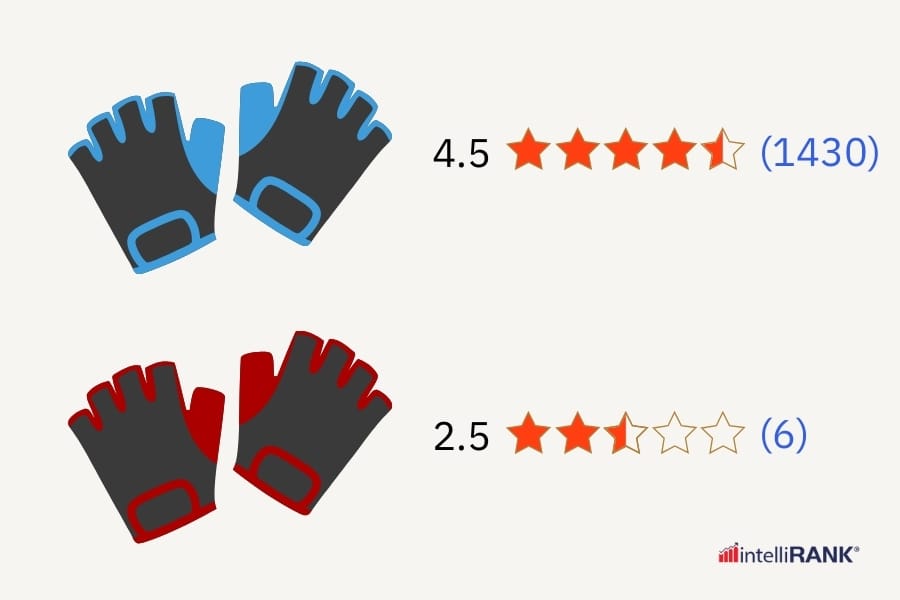
2. Star Rating Volatility
When reviews are separated, some variations may see their star ratings change dramatically.
- A variation with only 5 specific reviews could show a lower rating than when pooled with 200 reviews
- New variations with no individual reviews will show no rating at all
- Inconsistent ratings across variations can confuse customers
3. Competitive Disadvantage
Competitors who adapt quickly will have an advantage over those who don't.
- Well-reviewed individual variations will stand out
- Poorly-reviewed variations will be easier to identify and avoid
- New product launches will need standalone review acquisition strategies
Potential Positive Impacts
1. More Accurate Product Feedback
Customers will see reviews that actually reflect the variation they're considering.
- Higher trust in the review system
- Better-informed purchasing decisions
- Potentially lower return rates
2. Opportunity for Quality Variations to Shine
If you have one variation that performs exceptionally well, it will now be recognized individually.
- High-performing variations can earn premium pricing
- Quality differences become more transparent
- Better variations can capture more market share
3. Cleaner, More Honest Marketplace
The change reduces misleading social proof and improves marketplace integrity.
- Customers experience fewer mismatches between reviews and reality
- Sellers are incentivized to maintain quality across all variations
- Long-term trust in Amazon's platform increases
7 Critical Steps to Prepare for Review Sharing Changes
1. Audit Your Current Variation Structure
Go to ‘Manage All Inventory’ in Seller Central and review every variation family you manage. For each family, ask:
- _What variation theme am I using? (Color, Size, Scent, etc.)_
- _Are my variations correctly categorized?_
- _Do my variations have significant functional differences?_
- _How many reviews does each individual variation currently have?_
Identify which variation families are at risk of review separation.
2. Verify Your Variation Themes Are Accurate
Amazon's new policy relies on correct variation theme selection. Common mistakes include:
- Using "quantity" for color variations
- Using "size" for products with functional differences
- Misclassifying scent variations on scent-focused products
Correct these now before the changes roll out. According to Amazon, if you update variation themes after the change takes effect, reviews will be re-shared for eligible products.
3. Identify High-Risk and Low-Risk Variations
Create a spreadsheet categorizing your variations:
High Risk (likely to lose reviews):
- Variations with significant functional differences
- Newly added variations with few specific reviews
- Variations using incorrect themes
Low Risk (reviews will continue to share):
- Color or pattern variations
- Simple size variations
- Pack size or quantity variations
Focus your immediate efforts on high-risk variations.
4. Prioritize Review Acquisition for At-Risk Variations
For variations that will lose shared reviews, you need to build standalone social proof before the change takes effect.
Strategies to acquire variation-specific reviews:
- Run targeted PPC campaignsfor individual variations to drive sales
- Use Amazon's "Request a Review" button for every order
- Implement follow-up email campaigns(within Amazon's TOS)
- Offer promotions on underperforming variations to generate sales and reviews
5. Optimize Listings for Lower Review Counts
If some variations will inevitably have fewer reviews, you need to compensate with stronger listing elements:
Enhance your product detail page:
- Use high-quality images specific to each variation
- Create A+ Content that builds trust independent of reviews
- Add product videos demonstrating quality and features
- Write detailed, benefit-focused bullet points
- Include comparison charts showing variation differences clearly
Strengthen brand credibility:
- Enroll in Amazon Brand Registry if you haven't already
- Use Enhanced Brand Content to tell your brand story
- Highlight certifications, warranties, or guarantees
- Showcase awards or third-party validation
6. Monitor Competitor Activity
Your competitors are facing the same changes. Track how they're responding:
- Are they restructuring variation families?
- Which variations are they promoting most heavily?
- Are their review counts changing?
- Are they adjusting pricing strategies?
Use tools like Helium 10 to monitor competitor variations and identify opportunities as the market shifts.
Build Variation-Specific Sales with Top-Converting PPC Strategies!
As these review changes roll out, one effective approach is using targeted PPC to drive sales to specific variations that need more reviews.
Our Amazon PPC management services can help you allocate ad spend strategically across your variation family, focusing budget on variations that are at risk of losing shared reviews.
By driving more sales to these specific ASINs, you increase the likelihood of building standalone review counts organically through Amazon's "Request a Review" feature.
Combined with proper listing optimization and variation structure…
A well-managed PPC strategy helps maintain visibility and sales velocity during this transition period.
To try this strategic approach with our team, check out our PPC management services! 📈
Share this article
Free for Amazon Sellers
Get the FREE 4-Step Amazon Growth Strategy
The exact framework used by 4,000+ Amazon brands to launch, optimize, and scale — yours free.